The workplace continues to evolve at a rapid pace. While the shifts we’re seeing are especially visible heading into 2026, they reflect deeper, long-term changes in how work is designed and how people experience it. Workplace culture is no longer defined by where we work, but by how we work together.
Employees are seeking more than just a paycheck—they want alignment with values, real inclusion, and a sense of belonging. At the same time, leaders are recognizing that culture isn’t built through perks or policies alone, but through intentional design and consistent daily actions. Organizations today are navigating a complex blend of human connection and digital transformation, with growing emphasis on balancing flexibility, purpose, and performance in sustainable ways.
At The Strategy Group, we partner with nonprofit leaders to help make culture visible, intentional, and actionable. Let’s explore three key forces shaping workplace culture now and into the future—and how organizations are redefining what it means to thrive at work.
Mental Health as a Core Element of Workplace Culture
One of the most meaningful and lasting shifts in the modern workplace is the normalization of mental health as a leadership and organizational priority. What was once considered private or peripheral is now openly acknowledged, supported, and actively addressed.
Mental well-being is no longer a sidebar in benefits packages—it has become a foundational element of workplace culture. Organizations are offering resources such as therapy stipends, mental health apps, and designated wellness days. Burnout is being monitored more intentionally, and policies are evolving to protect focus, recovery time, and sustainability.
This cultural shift signals a broader redefinition of success: productivity still matters, but balance, resilience, and long-term capacity matter just as much.
AI as a Collaborative Partner in How Work Gets Done
Artificial intelligence is increasingly embedded in day-to-day workflows, supporting tasks such as drafting, analysis, forecasting, and operational support. The cultural shift is not simply about adopting new tools, but about how teams relate to them.
Organizations that are thriving are treating AI as a collaborator rather than a competitor—a force multiplier that reduces routine work and cognitive overload, freeing people to focus on creativity, relationships, judgment, and strategy. As a result, many are investing in AI literacy, ethical governance, and shared norms for how AI is used responsibly and transparently.
Over time, AI is becoming part of organizational culture itself: shaping how decisions are made, how work is distributed, and how human and technological strengths are balanced. The most effective cultures are those that intentionally design this partnership rather than reacting to it.
From DEI Initiatives to Belonging and Equity
Diversity, Equity, and Inclusion efforts are evolving from isolated initiatives toward a broader focus on belonging and equity embedded across the organization. The emphasis is shifting from surface-level representation to creating environments where people feel genuinely valued, heard, and able to contribute fully.
This evolution places responsibility for inclusion across leadership, systems, and everyday practices—not within a single department. Organizations are examining promotion pathways, policies, compensation structures, accessibility, and how technology and decision-making processes either reinforce or reduce bias.
As social and political contexts continue to shift, many organizations are reframing DEI through a more holistic lens—one that integrates mental health, accessibility, financial well-being, and generational equity. While language and approaches may continue to evolve, the need for workplaces grounded in belonging is enduring.
Culture Is Strategy Now
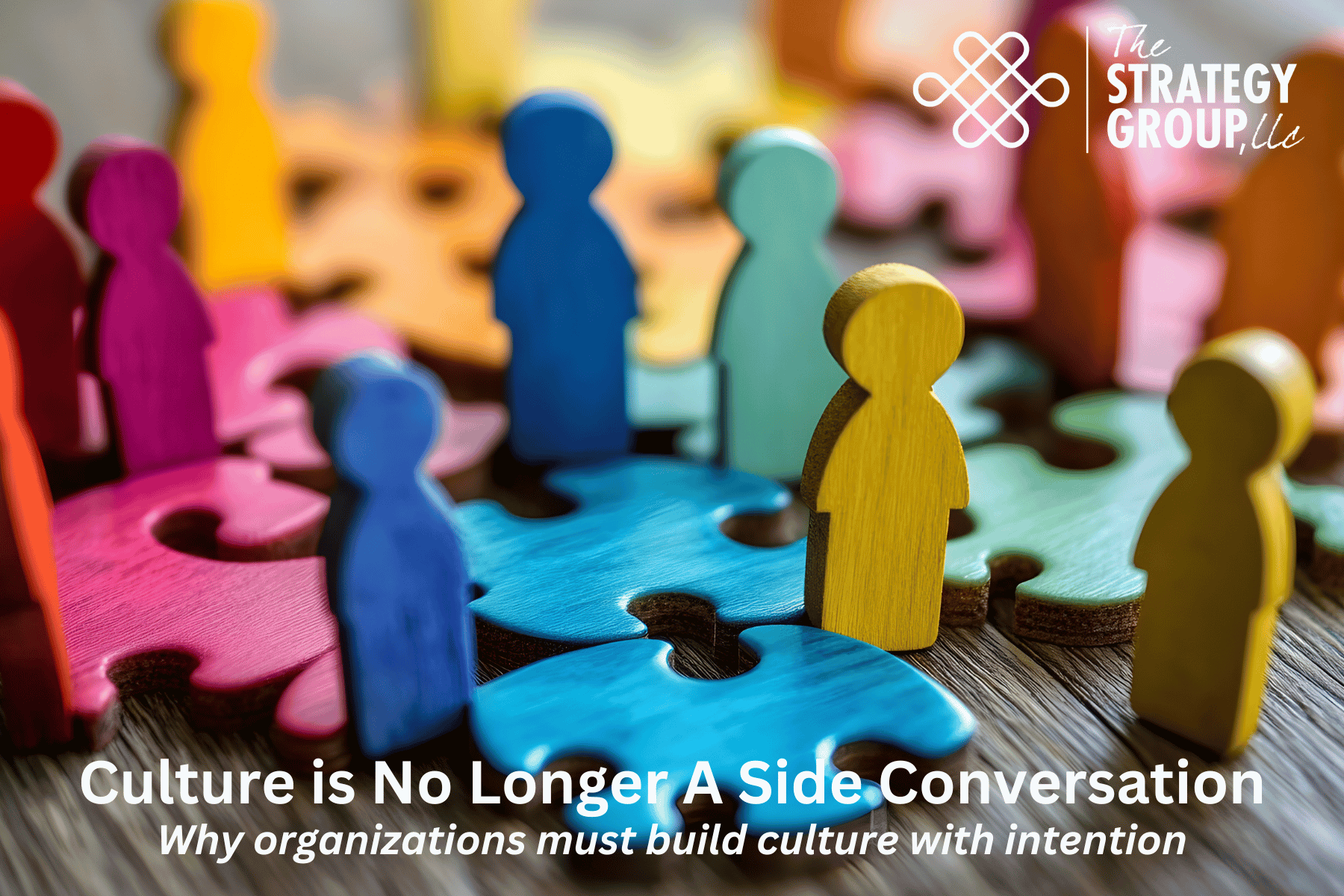
Workplace culture is no longer a side conversation or an abstract aspiration. In an environment shaped by attention to mental health, collaboration with AI, and a deeper commitment to belonging, culture has become a strategic asset that requires ongoing care and intention.
Nonprofits that treat culture as a living strategy—one that is reflected in how decisions are made, how people are supported, and how work is designed—are better positioned to adapt, engage their teams, and sustain impact over time.
At The Strategy Group, we work alongside nonprofit leaders through retreats, planning processes, and ongoing advisory support to help culture become more than an idea—to help it become something teams can feel, practice, and strengthen together. If we can be a partner to you in this work, please reach out to us at info@thestrategygroupllc.org.